
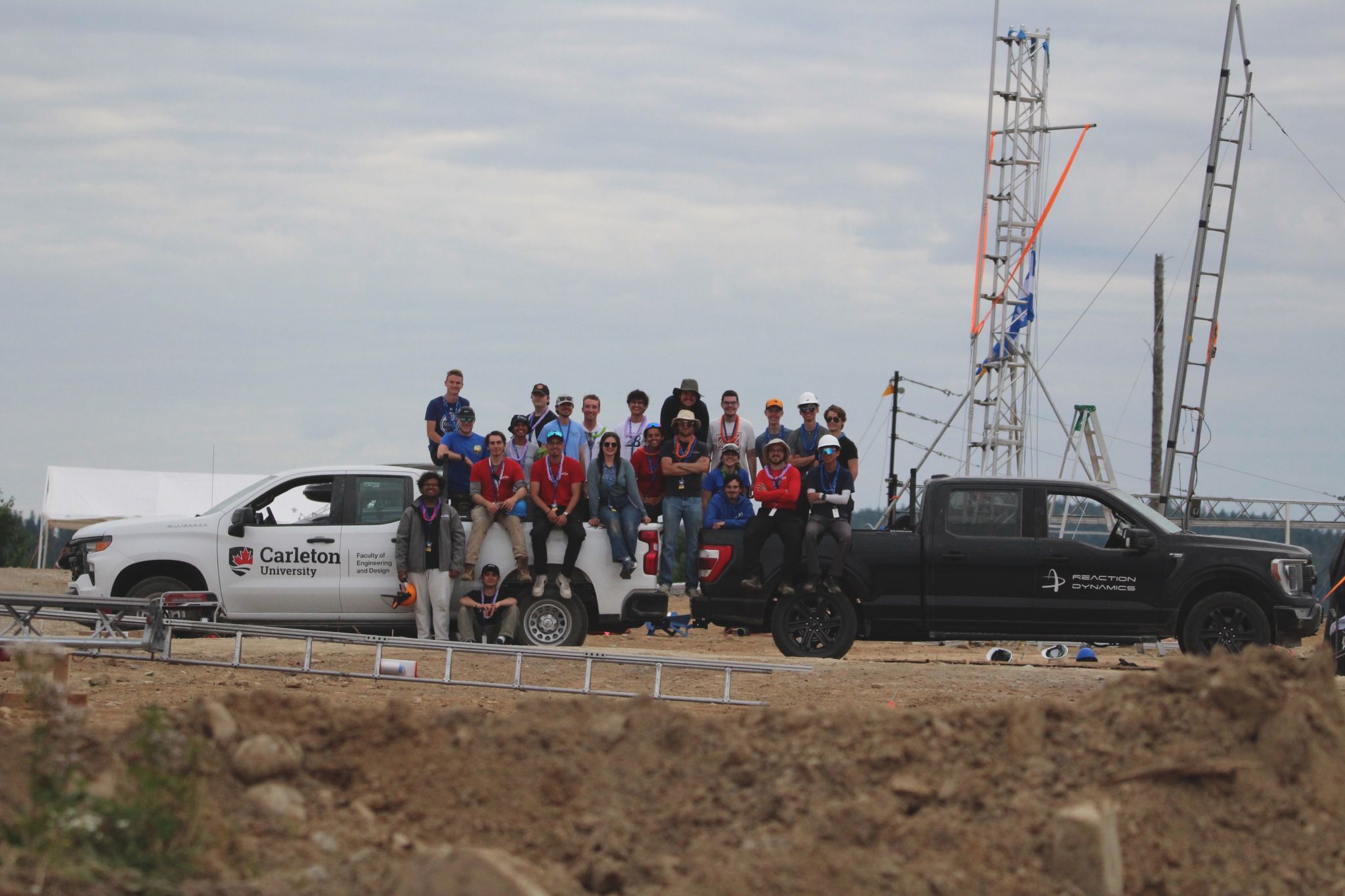
Who is CU InSpace?
CU InSpace is Carleton’s Rocket Engineering Design Team. We are a team of Carleton University students who design, build, and fly high-power rockets at the International Rocketry Engineering Competition (IREC) and the Launch Canada Rocketry Competition.
The team was founded by Will Zoratto in 2014 and in its 12 years of operation has successfully launched seven rockets at the IREC (formally Spaceport America Cup Rocketry Competition) in Midland, Texas, as well as five rockets at the Launch Canada Challenge in Timmins, Ontario.
Team Structure
Our team is broken up into five separate engineering subteams and an admin team. The five subteams are Aerostructures, Avionics, Payload, Propulsion, and Recovery. Each subteam has subteam leads who oversee the project planning and tasks that the subteam is responsible for.
Aerostructures
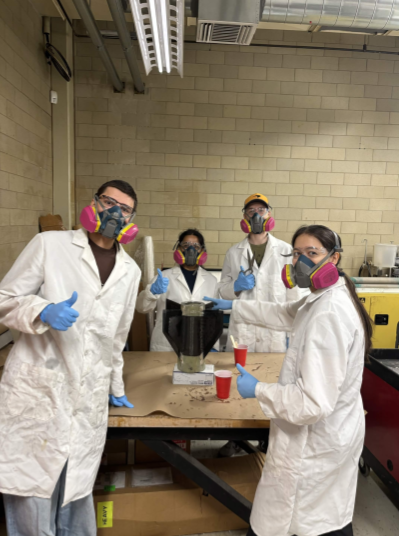
The Aerostructures team is responsible for designing, manufacturing, and testing the airframe and structural components of the rocket. This includes the body tubes, the fins, the nosecone, and the internal structure that keeps the rocket as stable as possible during launch. Our aerostructures team works initially with CAD software to develop the design and then moves into composites manufacturing and metal machining work. Finally, the team uses both physical testing and modeling to determine whether the components they have designed will survive the launch and landing
The entire airframe is manufactured completely in house, much of the work done by our own students. No experience is needed to get hands on with composites manufacturing. The Aerostructures team is also responsible for the amazing livery designs that go on the outside of the rocket and showcases all our amazing work.
Avionics
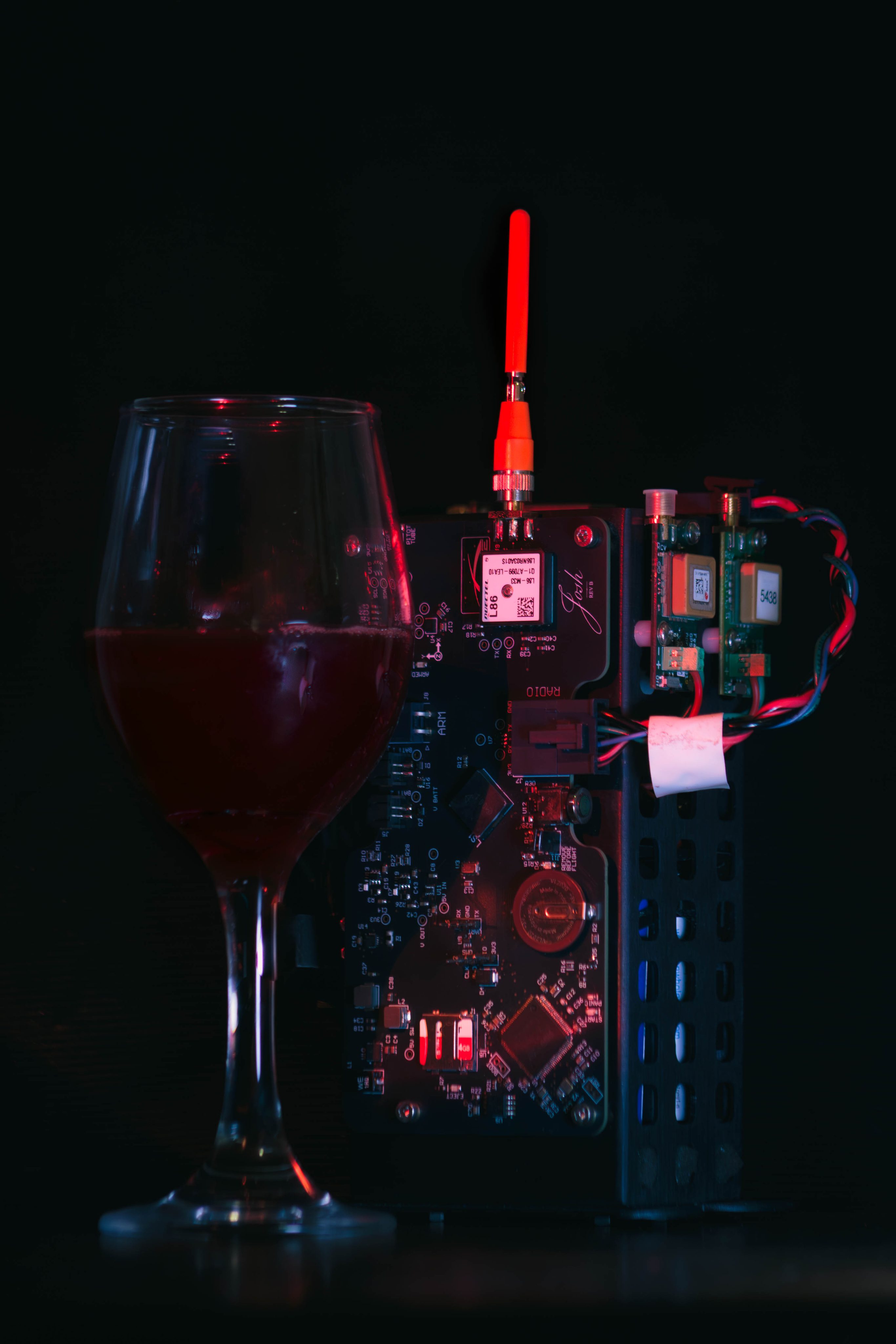
The avionics team is responsible for designing and manufacturing the telemetry systems of the rocket. These systems collect information about our elevation and speed and control the deployment of our recovery system. The avionics team is also responsible for tracking our rocket on the descent so that we can find it once it has landed.
Included in our avionics subteam is the hybrid control system which is the logic and electrical components that operate the hybrid systems from over a kilometer away. Included in the hybrid control system is also the data acquisition system that records all our engine data and relays it in real time to our UI.
Payload
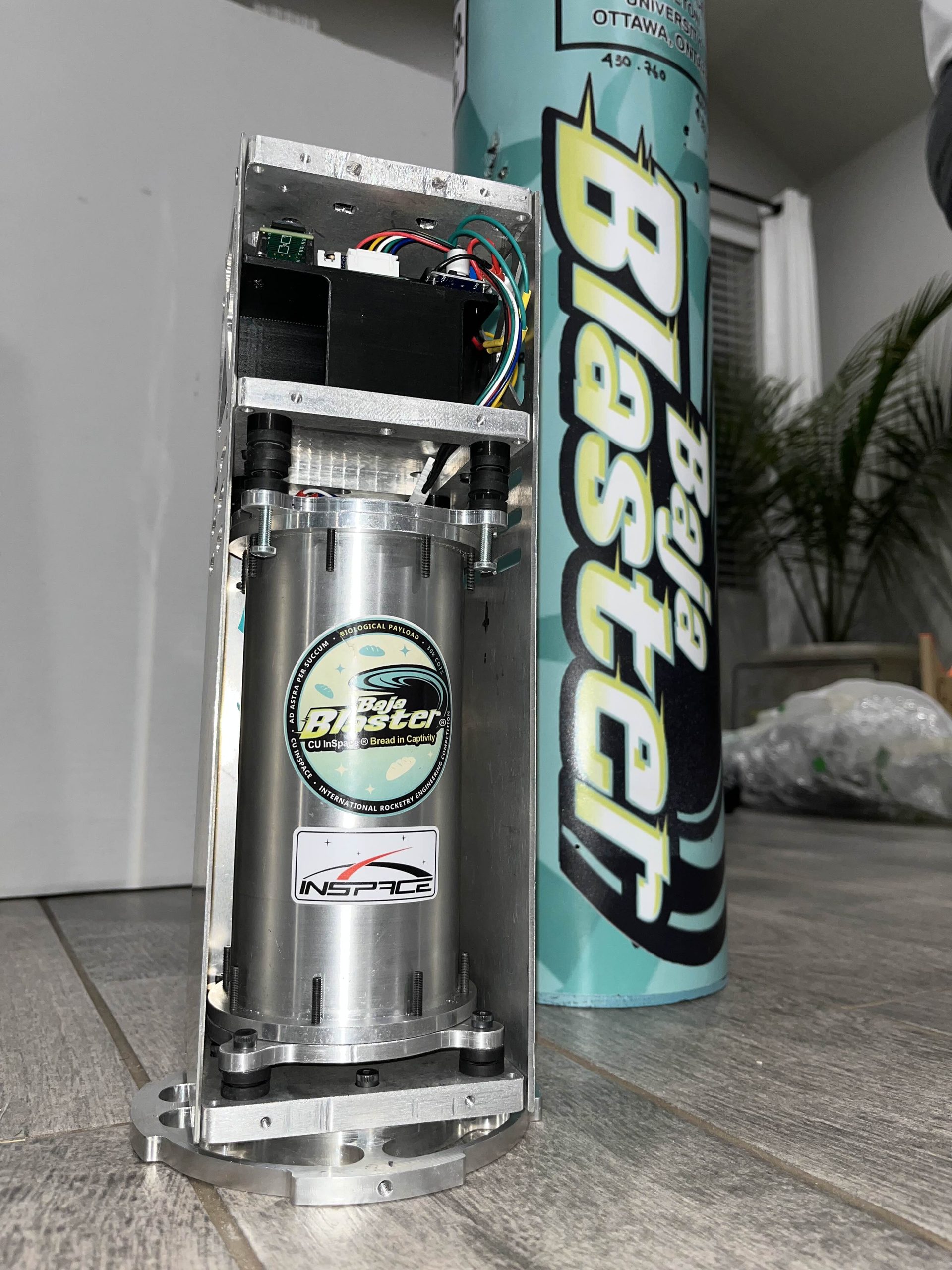
The Payload subteam designs, builds, and tests scientific experiments that fly aboard our rockets. Our work spans a wide range of disciplines, including optics, electrical systems, structures, sensors, data processing, and thermal control. Combining mechanical, electrical, and software engineering, we protect sensitive hardware from extreme launch conditions to capture clean, reliable scientific data from liftoff to recovery.
Recovery
The recovery team designs and tests the parachutes, deoloyment mechanisms, and rigging for the rocket. The system consists of a single reefed parachute with an initially constrained diameter, which is allowed to expand to its full size at 1500ft.
Our reefed chutes have been flown on 5 rockets with 3 fully nominal recoveries. Our team develops and sews our own custom parachutes in house, including our new toroidal chutes which allow for reduced parachute size and mass.
Propulsion
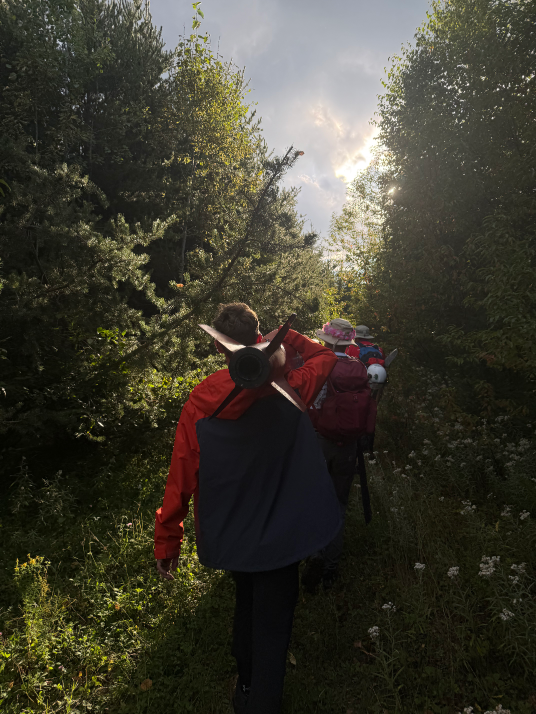
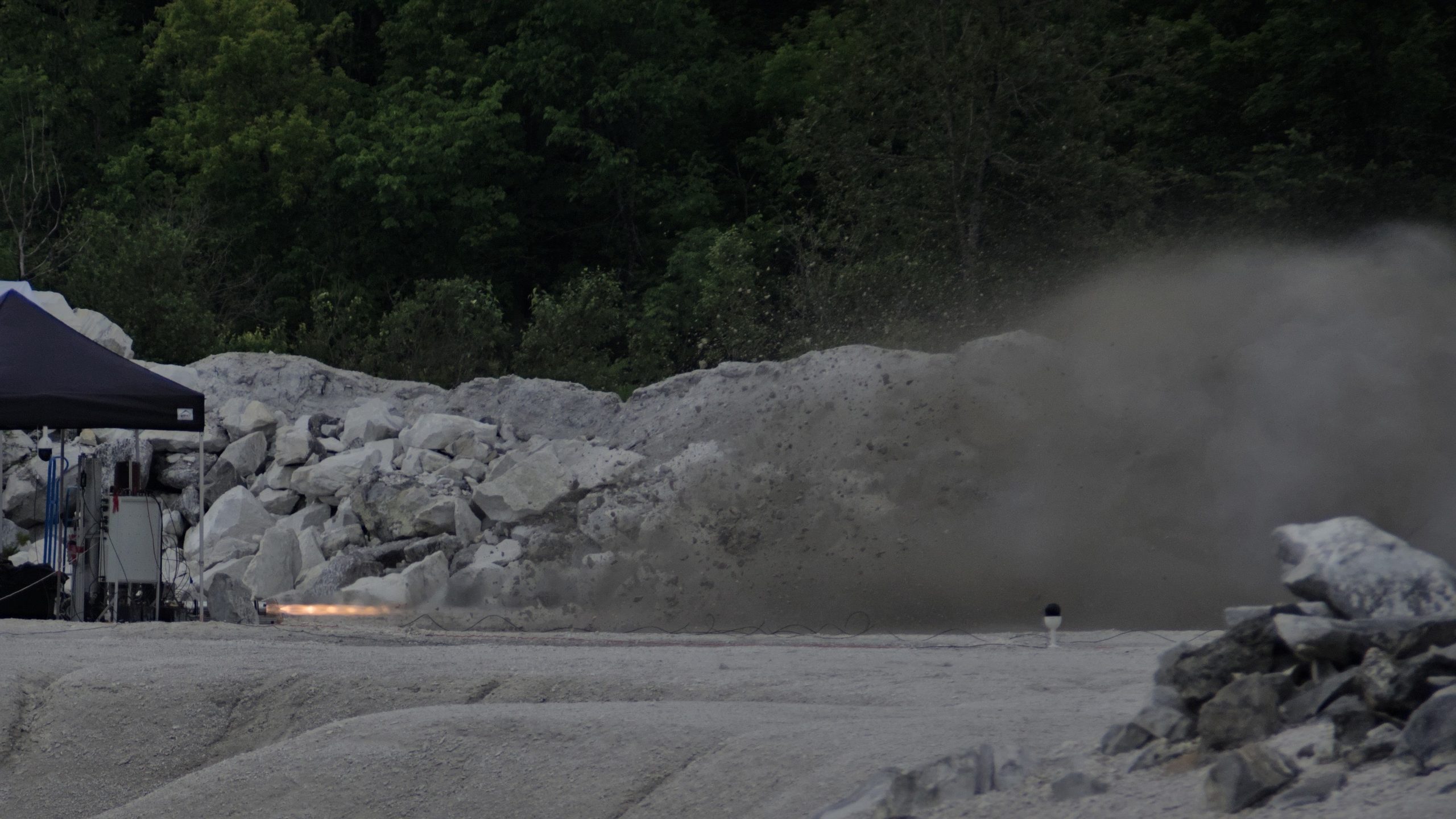
The propulsion subteam is responsible for the development and testing of student researched and designed (SRAD) hybrid rocket engine used to propel our rockets at Launch Canada. To date, the subteam has developed and static fired 3 engines in the ‘SB’ engine lineup. Currently, the propulsion subteam is developing the SB4 P-Class rocket motor to fly at Launch Canada (LC) 2027, as well as an Q class motor for LC 2028.