Iced Cappogee (CR26H)
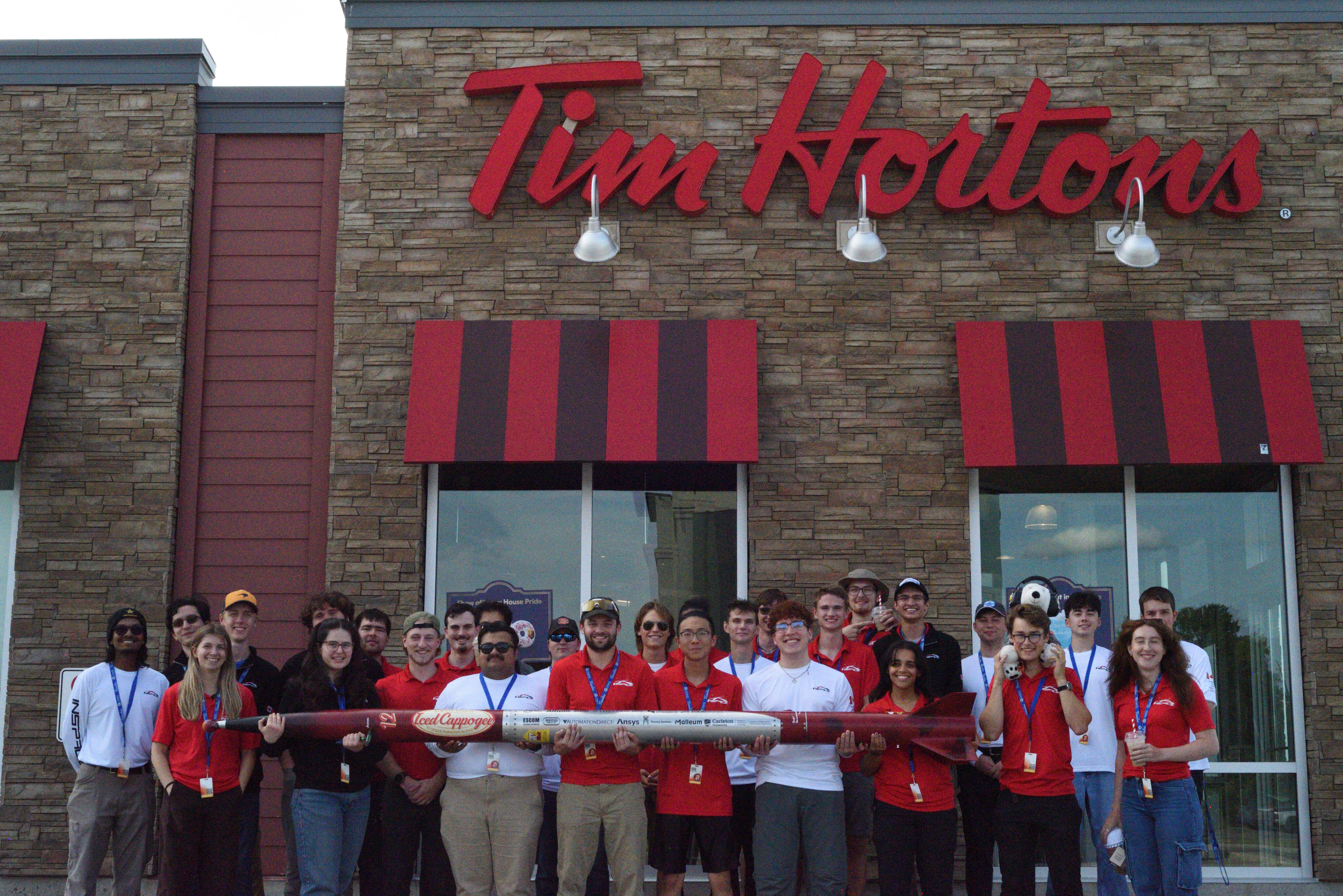
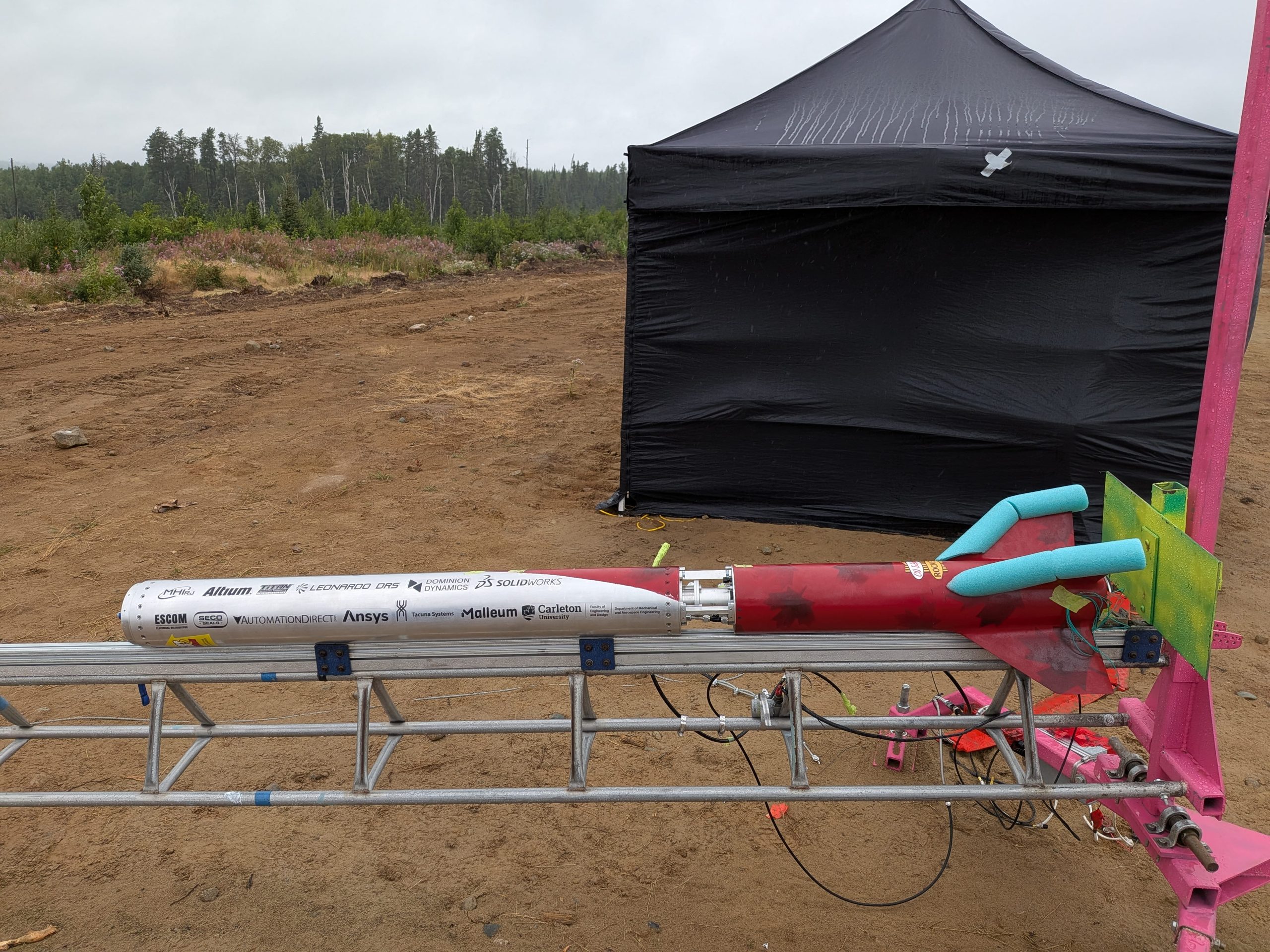
As the team’s 4th entry into the Launch Canada challenge, Iced Cappogee represented a new step for the team, in both complexity and in performance. It carried not only the team’s first successful flight of a custom built hybrid engine, but also the team’s first toroidal parachute and onboard camera.
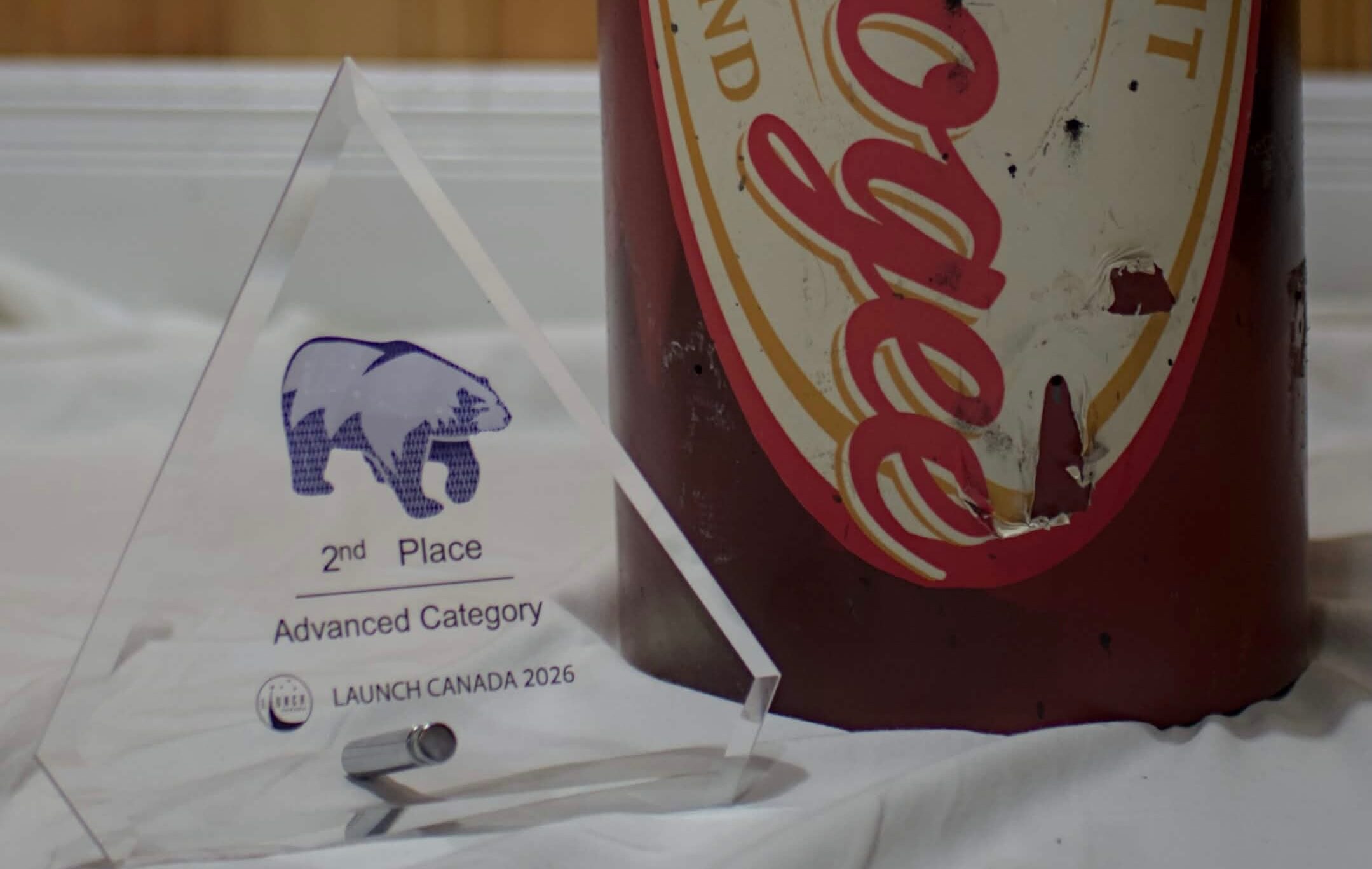
With its fully nominal flight to an approximate apogee of ~39k feet, it brought home not only the team’s second highest flying hardware (beaten the same day by the payload subteam on a stratospheric balloon) and 2nd place in the advanced launch category.
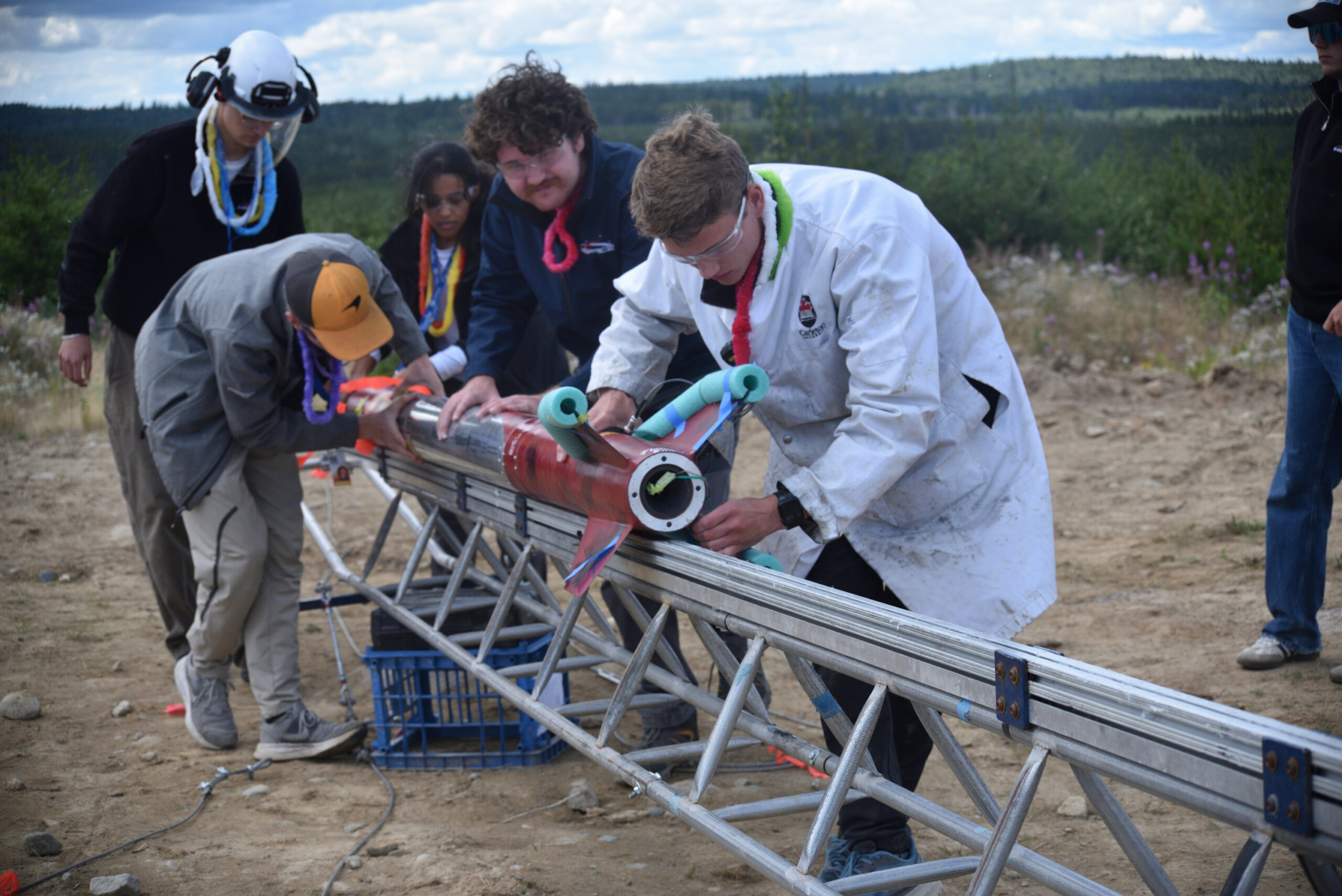
This rocket supported a fully composite airframe (aside from the engine) that was fully manufactured by the team in-house. The rigorous testing of these components allowed the team to be confident Iced Cappogee would not meet the same fate as its hybrid engine predecessor.
Descending under a reefed toroidal parachute, Iced Cappogee demonstrated the consistency of the team’s wireless reefing system, and served to test the concepts of a toroidal parachute, which gives more drag using a smaller chute, allowing for a smaller packed size and a smaller overall rocket.
Overview
| Competition | Launch Canada 2026 |
| Category | Advanced (2nd Place) |
| Mass – Empty | 26.2 kg (57.7 lbs) |
| Mass – Loaded | 45.1 kg (99.5 lbs) |
| Height | 3.52 m (138.73 in) |
| Diameter | 0.152 m (6 in) |
| Motor | Paraffin-Nitrous Hybrid |
| Total Impulse | ~33147 N*s |
| Average Thrust | 2921.5 N |
| Status | Launched and Recovered – Nominal |